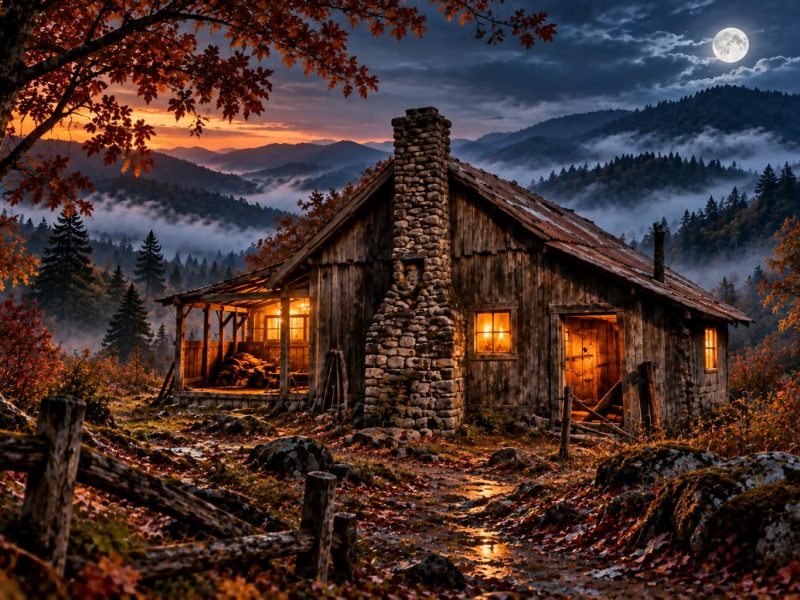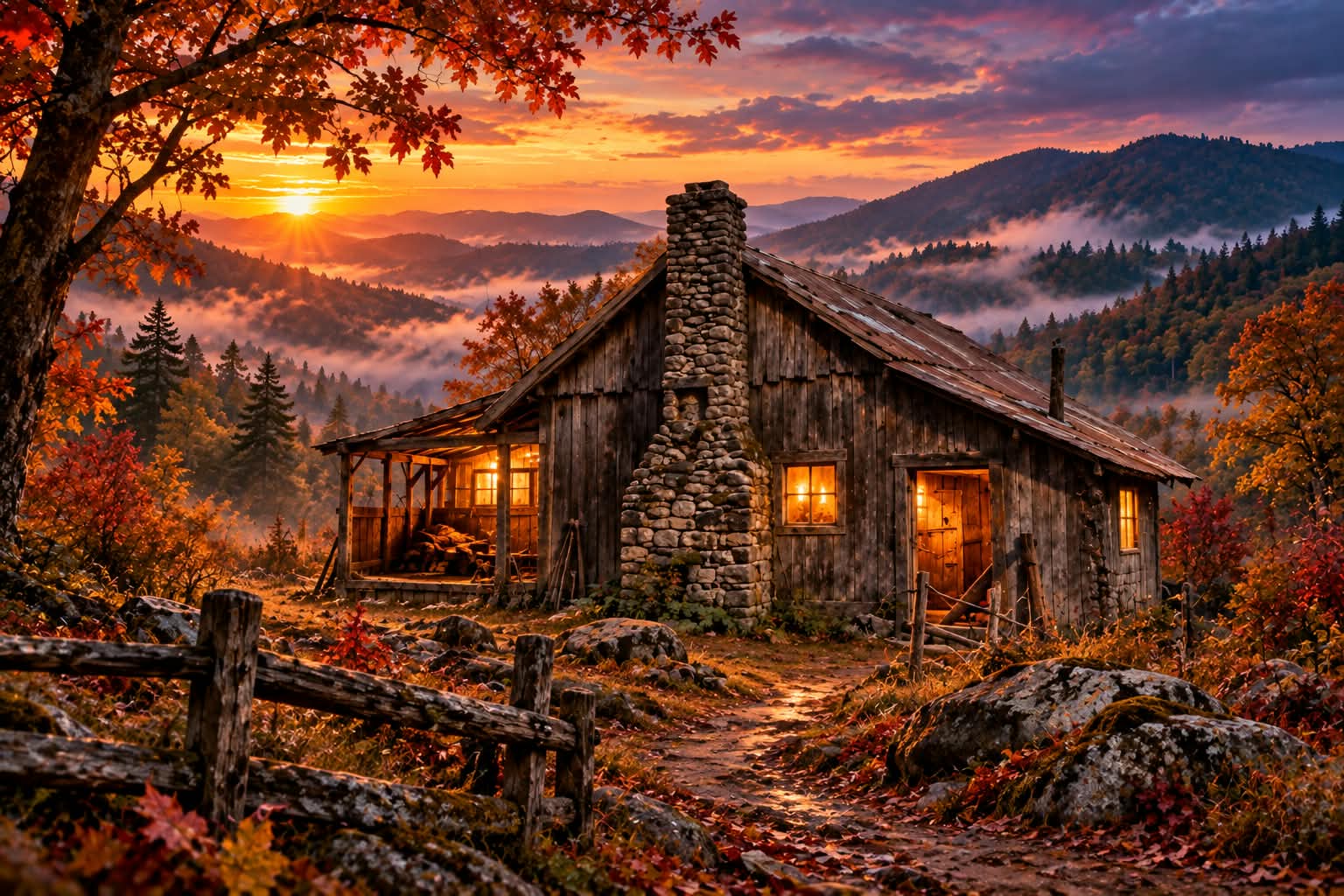
For nearly sixty years, a lonely wooden cabin stood hidden among the towering trees of the Appalachian Mountains. No electricity, no telephone, no modern comforts. Just an old stone chimney, a wooden door, and a man who had never experienced life beyond the mountains.
His name was Henry Walker.
People in the nearby town called him the forgotten man of the mountain.
Some believed he was afraid of the outside world. Others thought he was hiding a terrible secret.
But nobody knew the real reason Henry refused to leave his home.
And when a young journalist finally discovered his story, she uncovered something that would change everything she believed about loneliness, family, and the passage of time.
The Seventh Son Who Survived
Henry was born in 1931 during a particularly harsh winter.
His parents lived in a remote mountain cabin, several miles from the nearest village. They had very little money, but they owned a small piece of land where they grew vegetables and raised chickens.
Before Henry’s birth, his mother had lost six infant sons.
Each loss left the family more isolated from the world.
When Henry arrived, his mother believed he was a miracle.
She promised herself that nothing would ever take her last child away.
Henry grew up surrounded by forests, streams, and wild animals. His father taught him to hunt, repair wooden tools, and predict the weather by watching the clouds.
His mother taught him to read using an old Bible.
But she also taught him something else.
“Beyond these mountains,” she often whispered, “the world is full of things that take people away from those who love them.”
Henry believed her.
A Life Without Modern Technology
By the 1950s, the nearby towns were changing rapidly.
Cars travelled along newly built roads. Families purchased televisions. Electricity reached houses that had once depended on oil lamps.
But Henry’s family refused to modernise.
They continued cooking over a wood-burning stove, collecting water from a spring, and using candles after sunset.
When Henry’s father died, the young man took responsibility for the cabin.
A few years later, his mother also passed away.
Henry buried both parents beneath an old oak tree overlooking the valley.
He was now completely alone.
Yet he refused every invitation to move into town.
The mountains were the only home he had ever known.
The Stranger Who Arrived One Autumn
In October 1994, a young journalist named Emily Carter travelled to the mountain community while researching forgotten rural lifestyles.
She had heard rumours about an elderly man who lived without electricity and had never travelled in a car.
Curious, she asked local residents for directions.
After a difficult hike through the forest, Emily discovered a weathered cabin with a tall stone chimney.
An elderly man sat outside, carving a wooden bird.
“Are you Henry Walker?” she asked.
The man looked up.
“Depends who’s asking.”
Emily introduced herself and explained why she had come.
Henry hesitated before inviting her onto the porch.
Over the next several hours, he described his extraordinary life.
He had never visited a cinema, eaten in a restaurant, or used a telephone.
He had never travelled farther than the surrounding mountains.
But what surprised Emily most was that Henry did not appear unhappy.
He laughed easily, spoke affectionately about the wildlife, and seemed to understand the forest better than anyone she had ever met.
The Locked Room
Before leaving, Emily noticed a small wooden door at the back of the cabin.
It was secured with an old iron lock.
“What’s inside?” she asked.
Henry’s expression changed.
“Memories.”
Emily smiled politely.
“Family photographs?”
Henry shook his head.
“Something my mother told me never to open.”
The answer stayed with Emily long after she returned to town.
She wrote an article about Henry’s unusual lifestyle, but deliberately left out the locked room.
Some secrets, she decided, deserved privacy.
The Winter That Changed Everything
Twelve years passed.
In the winter of 2006, a powerful snowstorm swept across the mountains.
Henry, now seventy-five, became seriously ill.
A neighbour who occasionally brought him supplies discovered him lying beside the fireplace.
For the first time in his life, Henry was taken down the mountain in an ambulance.
He was frightened by the flashing lights, the engine, and the unfamiliar roads.
At the hospital, doctors treated him while nurses tried to make him comfortable.
One evening, Henry noticed a television mounted on the wall.
It was showing a documentary about the Moon landing.
He stared at the screen in disbelief.
“Those men are walking in the sky?”
A nurse explained that astronauts had travelled to the Moon decades earlier.
Henry remained silent.
Then tears slowly appeared in his eyes.
“My mother always told me the world was dangerous,” he whispered.
“But she never told me it was beautiful.”
The Secret Behind the Locked Door
When Emily learned that Henry had been hospitalised, she travelled to visit him.
He recognised her immediately.
“You’re the girl who asked too many questions,” he said with a weak smile.
Emily laughed.
They talked for nearly an hour.
Before she left, Henry reached beneath his pillow and handed her an old iron key.
“The room,” he whispered.
Emily looked confused.
“My mother made me promise never to open it. But I think I’ve spent enough of my life being afraid.”
He asked her to visit the cabin and discover what was inside.
The following morning, Emily returned to the mountain with Henry’s neighbour.
The cabin was cold and silent.
She approached the locked wooden door.
The key turned with difficulty.
Inside was a tiny room filled with dust-covered boxes.
There were letters, photographs, and old newspaper clippings.
Emily opened the first box.
What she discovered left her speechless.
The Letters That Never Reached Henry
Dozens of letters had been written to Henry by relatives living in distant towns.
Some invited him to visit.
Others offered him work, education, and a place to stay.
One letter, dated 1951, came from an uncle who wanted to help Henry attend college.
Another included a photograph of a family gathering.
And one particularly heartbreaking letter had been written by a young woman named Margaret.
She had met Henry briefly during a visit to the mountain community when they were teenagers.
Her letter said she had never forgotten him.
She had invited him to begin a new life with her.
But Henry had never seen any of the letters.
His mother had hidden them.
Emily sat on the dusty floor, surrounded by decades of lost possibilities.
Henry had believed nobody beyond the mountain cared about him.
In reality, people had spent years trying to reach him.
A Truth Too Heavy to Carry
Emily returned to the hospital with the letters.
Henry read them slowly.
At first, he said nothing.
Then he found Margaret’s letter.
His hands trembled.
“I remember her,” he whispered.
“She wore a yellow dress. She said she wanted to see the ocean.”
He looked toward the window.
“All these years, I thought she forgot me.”
Emily gently explained that the letters had been hidden in the locked room.
Henry closed his eyes.
For several minutes, neither spoke.
Finally, he said something Emily would remember forever.
“My mother loved me so much that she was afraid to lose me.”
He paused.
“And because she was afraid, she kept me from living.”
The Final Journey Home
Henry’s health continued to decline.
Doctors explained that he might not recover fully.
When asked whether he wanted to remain in hospital, he shook his head.
“I want to see my mountains again.”
Arrangements were made to take him home.
Emily accompanied him.
As the vehicle climbed the narrow mountain road, Henry watched the passing landscape through the window.
For the first time, he saw the valley from a road rather than a forest trail.
He noticed houses, power lines, and distant vehicles.
The world had changed.
Yet the mountains remained familiar.
When they reached the cabin, Henry asked to sit outside.
The sun was setting behind the trees.
Emily placed a blanket around his shoulders.
“Do you regret staying here?” she asked.
Henry considered the question.
“I regret the people I never met,” he answered.
“But I don’t regret the mornings, the birds, or the stars.”
He looked at the old cabin.
“This place gave me peace. Fear kept me from discovering what else life could offer.”
The Last Light on the Mountain
Henry died peacefully several weeks later.
Emily helped organise a small memorial near the oak tree where his parents were buried.
Relatives who had never met him travelled from distant towns.
Among them was an elderly woman named Margaret.
She carried a faded photograph of herself wearing a yellow dress.
When Emily showed her Henry’s cabin, Margaret stood silently for a long time.
“He remembered me?” she finally asked.
Emily nodded.
“Until the very end.”
Margaret wiped away a tear.
Before leaving, she placed a small bouquet of yellow flowers beside Henry’s grave.
The cabin remained standing.
Years later, Emily returned to the mountain and found the building slowly disappearing beneath climbing vines and autumn leaves.
She looked through the window.
The fireplace was cold.
The wooden chair stood empty.
But on the table lay one of Henry’s final handwritten notes.
It contained only two sentences.
“The world is bigger than the place where we are born. Never let fear convince you that you have already seen everything worth seeing.”
Emily carefully closed the door.
Outside, the sun was setting over the mountains.
And for the first time in many years, the last light in the old cabin had finally gone out.
This is an original fictional story inspired by the supplied image, not a verified biography or historical account.